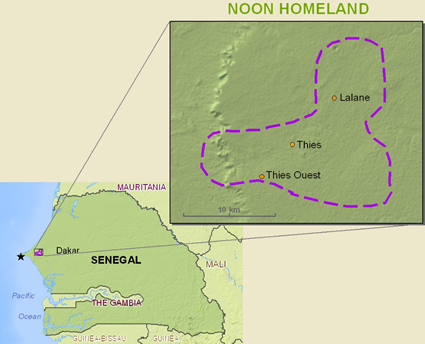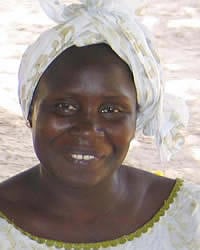

The Serer-Non people live in villages not far from Dakar. Their language is called Noon. They are one of the three subgroups of the greater Serer people of West Africa.
Serer-Non society is built upon strong family ties and tradition. Farmers and herders, the Serer-Non live on a subsistence basis, relying on good crop yields for a prosperous year. The men cultivate peanuts and millet for the subsistence of his family and community. After this season the men often go to the cities to work. There is often a network of friends and family in the city for men to live with. When the growing season is over for the main crops, women plant gardens of peas, okra, onions and tomatoes on her husband's land or a small plot of her own. She may form irrigation ditches around these plantings or carry the water to the garden herself.
While the men leave for the city to work, Serer-Non women stay at home caring for her family. The women work very hard, starting before daybreak preparing breakfast and working far into the evening preparing dinner and cleaning. They haul water, work in fields and care for nursing infants. Girls are expected to care for their siblings while the boys work in the fields with their father.
Celebrations among the Serer-Non include marriages and baby naming ceremonies. Both celebrations involve feasts and gifts of money. The Serer-Non enjoy song and dance and it is not limited to special occasions. Funerals are a process that starts when a person dies. Wailing and mourning continues until the burial. A month later a feast is given for the friends and family of the deceased.
Serer-Non adhere to traditional beliefs while most have converted to Islam. A small number are Roman Catholic. The Serer-Non have been very gradual in accepting religions outside of their traditional beliefs. Even though people claim to have accepted Islam there are still many traditional beliefs included. Combining these two systems of beliefs is called "folk Islam". All systems of belief among the Serer-Non include a type of charm. The Muslims wear a picture of a Marabou (a holy Islamic man) and a portion of Koranic verses in their charm. This is believed to give the charm power and bless the wearer. Catholic believers wear a necklace with a picture of Christ or a Diocese in their charm. Animists wear a charm with a bone, shell or dried portion of an animal or ancestor who died long ago.
A 1987 language survey identified the definite need for translation, which an expatriate couple began in 1993. At that time, churches began having laymen translate weekly Gospel readings into Noon. A Noon team translated the New Testament, which was dedicated in 2012.
Two previous songwriting workshops created Scripture-based songs in local music styles. These led to increased use of Noon choral songs in churches, which directly engaged young people with the New Testament.
Church leaders are leading transition literacy classes to help people read Noon Scriptures fluently and feel comfortable using them. For children, seniors, and those not yet literate, the New Testament is being put into audio format.
Pray for better roads and adequate medical clinics for rural Serer-Non people in Senegal.
Pray that Christians among the Serer-Non will shine the light of the gospel in word and deed among their Muslim neighbors.
Pray for power encounters to show them that Jesus is Lord of all!
Pray that soon Serer-Non disciples will make more disciples.
References
Scripture Prayers for the Serer-Non in Senegal.
| Profile Source: Joshua Project |